
AI Content Authoring and the Chicken or Egg Dilemma
My own meandering version of a “How I make this” statement

I spend a lot of time reading. These days most of it has been online. My time is split between reading the New York Times and reading articles on Substack, with various and sundry other blog posts and technical articles mixed in, along with novels and non-fiction from the New York Public Library.
I know I’m not the only person who has started to notice certain AI “tells” in written content. There’s just sort of a feeling you get if you’ve been reading enough material. I’ve also noticed them because I’ve been working with Claude Chat a fair amount and I notice the same phrases coming up in Claude responses, which is perhaps why I have the feeling that these are AI writing patterns.
Some phrases that sound like AI writing to me:
“It isn’t [x / just x], it’s [y].” (known as “negative parallelism”)
“I want to name [xx things / the thing]” , “it’s worth naming ...”
“Once you see [x], you can’t un-see [x].”
“This is the part [that I figured out / that’s so important], and it is the thing most [people / articles] skip.”
Here on Substack, the platform is concerned about AI content, and introducing tools to possibly increase trust and honor personal preferences. I will say that the tone of this announcement feels right — no hyperbole, a humility in recognizing this is new and they don’t have all the answers. I appreciate their focus on transparency, and the invitation for feedback (things I know make for a successful organization).
My first exposure to the updates wasn’t the official post, however, but a reaction essay by a writer I have followed and respected for over a year. I wholeheartedly agreed with his take, and when I first considered the suggestion to provide a “How I make this” statement, I bristled. I don’t feel a need to justify my own creative process to anyone, especially not to convince anyone who prefers to believe otherwise that I am essentially an AI bot. This reminds me somewhat of all of the cookie disclosure banners popping up on websites in response to well-meaning but somewhat idiotic privacy regulations. Of course modern websites are throwing off cookies all over the place. If you use any analytics tracking, it’s basically a given. I’d be more interested to see a banner announcing that miraculously no cookies were being used on a website! ...but I digress.
After my initial ire subsided, I started to think about how I would actually describe my own process as a self-reflective exercise. How do I produce writing for Fractal Grace and other places?
I feel like I have been writing my whole life. Sometimes I find myself walking down the street and mentally narrating the scene, testing and discarding words and phrases until I am pleased with the ephemeral result, which is forgotten moments later. Perhaps due to all of this unconscious “practice”, as well as a mind that tends to put things into logical order naturally, most of my writing comes out almost fully formed. Just like my mental narration, I might edit as I go or later reread and make adjustments. For the most part what a reader sees is what I thought onto a piece of paper with a pen then reworked a bit.
I do use AI for various things these days but asking it to write articles for me isn’t one of them. What I have started doing is if I feel something I’ve written is a bit “thin” or I feel something is missing or “off”, I ask AI to critique my writing like an editor. Generally the feedback I’m looking for are suggestions of what might be unclear or where something I state could be backed up with a concrete example or evidence. I take these suggestions into consideration and do my own rewriting. Very rarely are specific wording suggestions just copy-and-pasted into place. I’m too much of an opinionated control freak to allow that sort of intervention.
It can be tempting to fault the author of a piece that feels like AI has had a hand in its creation. We can all be rather precious about our human-generated content. However I wonder how accurate these tools that exist specifically to determine whether content has been written by an AI are in actual practice. If you think about it, the nature of AI itself makes this more complicated than any simple algorithm.
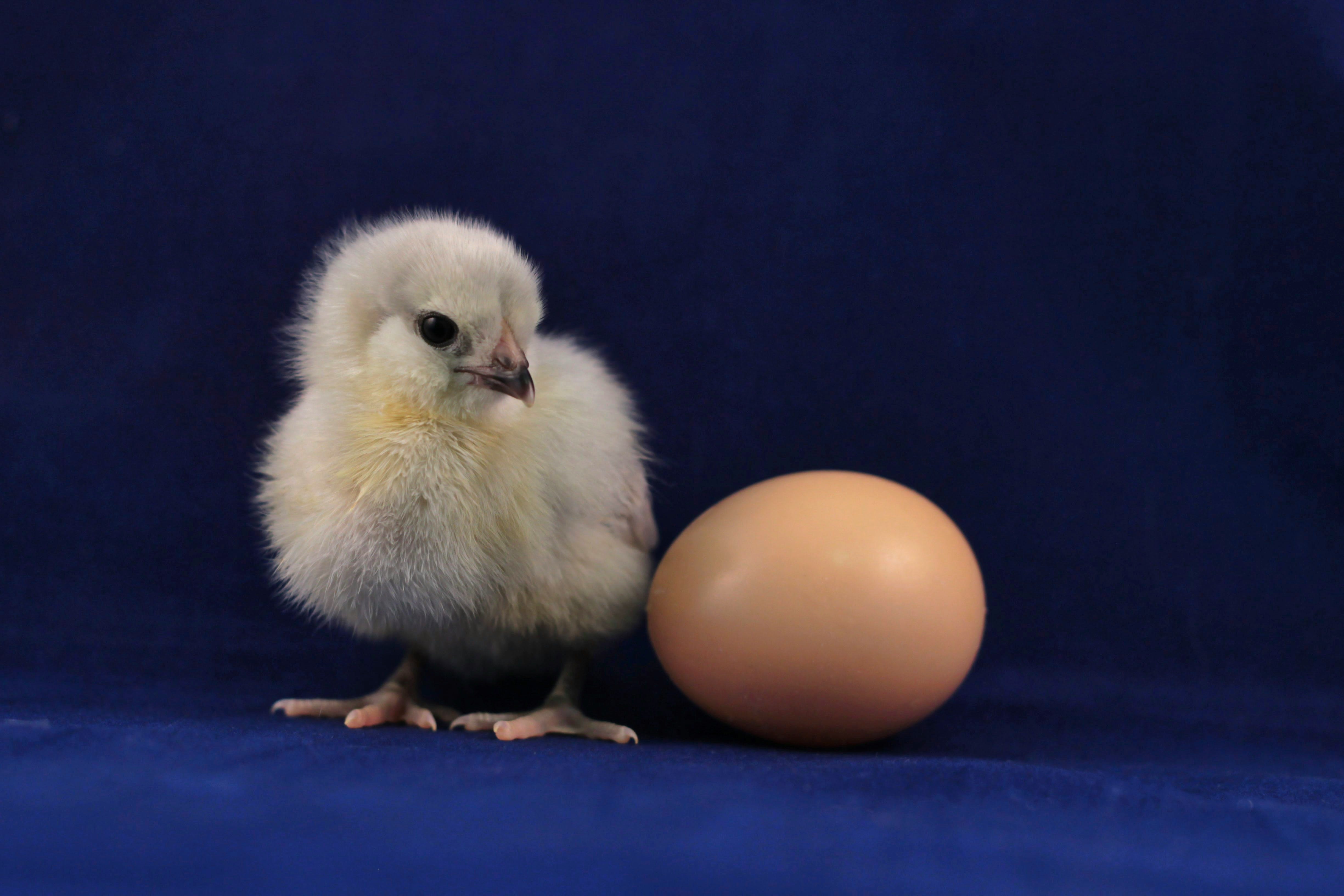
Ever since I was a child I’ve been a fairly voracious reader and I recognized at a certain point that the nature of the practice of reading is what developed my own particular writing style. Encountering words built up a vocabulary where I would use those words in my own communications and encountering certain sentence structures tends to affect the sentence structures that I create while writing. In a way we have a chicken-or-egg situation with AI and human writing. Similar to the way that humans improve their writing skills by reading the works of great writers, AI has been able to create sentences that make sense structurally based on the examples of other writing, whether those are forum posts, books, blogs, articles, or social media posts.
If you look at how AI was developed, specifically large language models, it was trained on billions of words and paragraphs written by actual humans. If AI writes a certain way, isn’t that because humans have written a certain way? As a probability-based tool, the construction of sentences and paragraphs by LLMs is essentially done by considering “what likely comes next here?”, and much of the nature of the AI-sounding phrasing is that of common clichés. Since LLMs don’t have the advantage of a rigorous High School AP English teacher beating the clichés out of its output, they slip right through.
From my own reading of internet content over the last 30 years, I do recognize many of these “AI” structures from human-generated writing, much of it of the pithy how-to format popular on experts’ blogs, not to mention marketing copywriting. There is an additional factor which makes these small quantities of sentence structures seem more common than they are in our natural conversation or human-generated writings, however.
The creation of LLMs isn’t just about hoovering up all the written words in the digital world. Regular reading humans are also part of the process. “Reinforcement learning from human feedback” (RLHF) refers to the process of humans rating LLM output as part of the training process. Small pools of paid “annotators” would choose between output variations, thus baking-in certain preferences. So it’s quite possible that some humans actually like those phrasings (or at least used to, before they became so over-prevalent and tarred with the AI brush.) Of course, LLMs being the black-boxes they are (even their creators aren’t fully capable of explaining how they work), determining exactly why these phrases keep showing up is pretty difficult (though some have tried...)
Additionally, if more and more content is going to be created with AI’s assistance (if not generated completely) and humans continue to read that content on LinkedIn or Substack, does that mean that now humans will start to absorb those AI-vibing sentence structures and use them more in our own writing, the way that humans are naturally influenced by the writing that they read? Does that then mean that content written by AI will feel more or less like it was written by AI? Or will we read more truly human-generated content that “feels like” it was written by AI? Similarly, if we humans are told our pet phrasings and em-dashes and bolded sentences are now “AI tells”, will we self-consciously expunge them from our own authentic voice? (Another study found that humans and LLMs are “co-evolving” linguistically in just this sort of feedback loop.)
Considering all this, it’s easy to see why AI-Detection tools are far from perfect, and we may never be able to know beyond all doubt that something we’re reading was written by a human being — and that bothers us. Why do we care so much whether something we read was “written by AI” or not? It’s because connection matters. Language is the only way we can experience another person’s reality and emotions, so reading someone’s writing provides that window into their soul[1] that we crave as social animals. We want to feel our minds joining with their minds. When we read someone’s words, we want that connection to be authentic, and not with a robot.
As a test of the new Substack Pangram system, I took my first draft of this essay, guaranteed 100% brain-and-hand-crafted and pasted it into the Substack UI to run the AI test on it. I was pleased to see that the result came back as “100% human written,” which is accurate.
I then shared the draft with my AI-writing-critique partner and made it a lot better in my own opinion — sharper, more interesting, with more concrete examples (which my own AP English teacher would have approved of wholeheartedly). Pangram still recognizes it as “100% human written.
Now, whether you as a bona fide human reader would have preferred my first draft or this final version, we’ll never know. 😉
Yep, there’s a cliché, and I picked it out myself.↩︎